
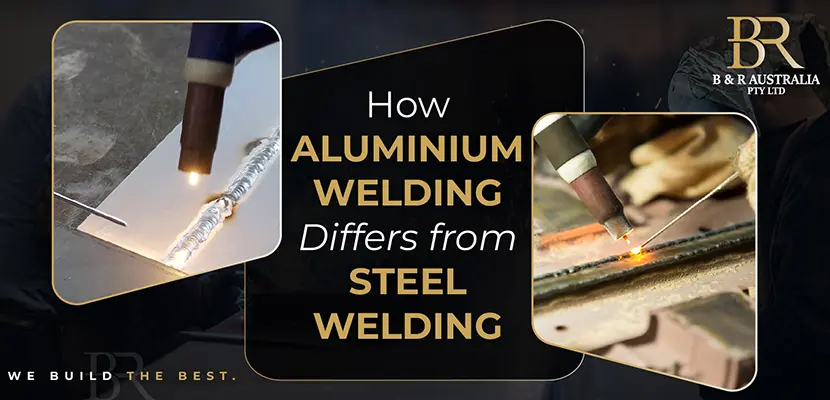
Aluminium and steel are common in workshops, factories, construction sites, vehicles, and machinery, but they do not behave the same under a welding torch. Aluminium heats quickly, melts with little warning, and needs careful surface cleaning. Steel usually gives the welder more time to control the joint. Knowing how aluminium welding differs from steel welding helps prevent cracks, weak joints, distortion, wasted material, and costly repair work during fabrication or maintenance projects of all sizes.
Welding Aluminum vs Steel: What Is the Main Difference?
The main difference between welding aluminum vs steel is the way each metal handles heat.
Steel heats at a steady rate and changes colour as the temperature rises. An experienced welder can watch the colour and adjust the torch before the metal becomes too hot.
Aluminium does not give the same warning. It may look unchanged and then melt suddenly. It also moves heat away from the weld area much faster than steel. The welder may need strong heat at the start, but once the whole piece gets hot, that same setting can burn through the material.
This is one reason thin aluminium sheets demand close attention.
Aluminium and Steel Welding Comparison
| Welding Point | Aluminium | Steel |
|---|---|---|
| Heat flow | Spreads heat quickly | Holds heat near the joint |
| Melting signs | Little colour change | Clear colour change |
| Surface cleaning | Oxide must be removed | Rust, oil, paint, and scale must be cleaned |
| Common methods | MIG and TIG | MIG, TIG, stick, and flux-cored |
| Shielding gas | Argon is common | Carbon dioxide or argon mixes |
| Wire feeding | Soft wire may jam | Steel wire feeds easily |
| Warping risk | High on thin sections | Usually easier to manage |
| Welding speed | Often needs faster travel | Depends on material thickness |
Why Aluminium Needs Careful Cleaning
Good cleaning matters before any welding job, but it becomes especially important when welding aluminum.
Aluminium develops a thin oxide layer as soon as it comes into contact with air. The oxide melts at a much higher temperature than the aluminium underneath. If it remains on the surface, the base metal may start melting while the outer layer stays in place.
This can leave small holes, trapped gas, poor fusion, cracks, or an untidy weld.
Before starting, the welder should remove:
- Grease and oil
- Moisture
- Paint or coating
- Dust and dirt
- The oxide layer
A stainless-steel brush used only for aluminium works well for surface cleaning. A brush previously used on steel may leave iron particles behind and contaminate the joint.
Steel also needs a clean surface, though it usually tolerates small marks better than aluminium.
Which Welding Method Works Best for Aluminium?
MIG and TIG are the usual choices for welding for aluminum. Each process suits a different type of job.
TIG Welding
TIG welding gives the welder close control over the heat and filler rod. It works well for thin sections, repair work, visible joints, and jobs where appearance matters.
Workshops often use TIG for:
- Tanks and pipes
- Marine fittings
- Car and motorcycle parts
- Handrails
- Thin sheets
- Custom metalwork
The process takes more time, but it can produce a clean, smooth weld in skilled hands.
MIG Welding
MIG welding suits thicker aluminium and larger fabrication jobs. It works faster than TIG and may be more practical when a workshop needs to complete long welds.
The soft wire can create problems. It may bend or jam inside an ordinary feeding system. A spool gun or push-pull feeder helps the wire move through the welding gun without folding.
Steel welding offers more choices. Depending on the work, a welder may use MIG, TIG, stick, flux-cored, or submerged arc welding.
Can You Weld Aluminum to Steel?
Many people want to know whether they can directly weld aluminum to steel.
In most cases, ordinary fusion welding does not provide a reliable joint. The two metals have different melting temperatures and expansion rates. When they melt together, brittle compounds can form between them.
The weld may appear sound at first, but it may later crack under movement, vibration, impact, or heavy loads.
Fabricators looking at how to weld aluminum to steel often use another joining method, such as:
- Bimetal transition strips
- Bolts and rivets
- Brazing
- Adhesive bonding
- Friction welding
- Explosion-bonded inserts
A bimetal strip has aluminium on one side and steel on the other. The welder joins aluminium to the aluminium side and steel to the steel side. This avoids placing both metals in the same molten weld pool.
B & R Australia can review the materials, joint design, load, location, and working conditions before suggesting a suitable method.
Heat Control and Metal Distortion
Aluminium expands quickly when heated. Thin panels may twist, bend, or pull out of shape after a short weld.
A welder can reduce this movement by using clamps, fixtures, short welds, balanced welding sequences, backing bars, and cooling gaps. Faster travel can also keep excess heat out of the part.
Steel can warp too, especially on long welds or thin sheets. However, its slower heat movement usually gives the welder more control.
For example, welding a long seam on an aluminium cover may require several short passes. Trying to complete the whole seam in one run could leave the panel curved or uneven.
Choosing the Right Filler Metal
Filler wire must match the base metal and the purpose of the finished part.
With aluminium, the wrong filler can cause cracking, poor corrosion resistance, low strength, or colour differences after anodising. Marine parts, transport components, tanks, and general workshop items may need different filler grades.
Steel filler selection is often easier for everyday mild-steel work. Even then, the welder should check the joint strength, welding position, operating temperature, and expected load.
Common Aluminium Welding Problems
Poor preparation or incorrect settings can cause:
- Burn-through
- Porosity
- Cracking
- Black soot
- Lack of fusion
- Uneven weld beads
- Wire feeding trouble
- Excessive warping
A welder should check the gas flow, surface condition, filler grade, wire speed, torch angle, and heat setting before working on the final part.
Why Experience Matters
A person who regularly welds steel may still need time to adjust to aluminium. The weld pool moves differently, the heat builds quickly, and small errors can damage the material.
Good aluminium welding comes from clean preparation, suitable equipment, steady hand movement, correct filler selection, and close control of the heat. For structural or safety-related work, welders should also follow the project drawing and relevant welding standard.
Frequently Asked Questions
Is aluminium harder to weld than steel?
Yes. It heats quickly, melts with little warning, and needs careful cleaning.
Can a normal MIG welder weld aluminium?
It may work with the right liner, rollers, spool gun, wire, and argon gas.
Which gas is used for aluminium welding?
Pure argon is commonly used for TIG and MIG aluminium welding.
Can aluminium be welded straight to steel?
Direct welding is rarely recommended. Transition strips or mechanical joining methods are usually safer.
Why does aluminium warp during welding?
It spreads heat quickly and expands more, which can pull thin sections out of shape.