
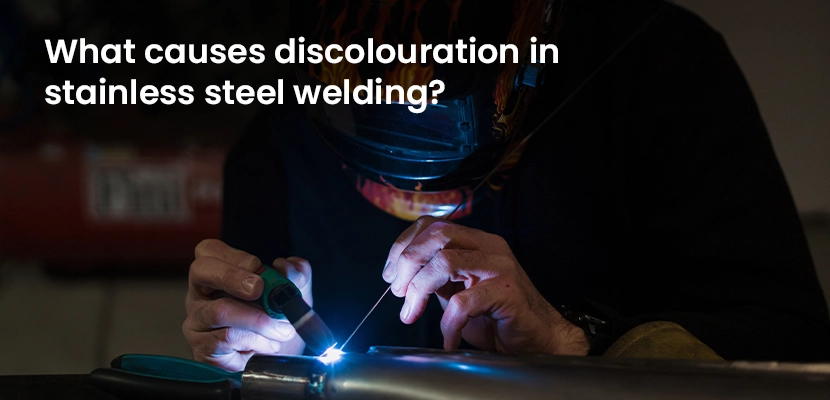
Have you seen blue, brown or yellow marks around a stainless steel weld? These marks are common after welding, even if the metal looked clean before you started work. Some welds have a light golden color, others have dark spots that are hard to remove.
This happens because stainless steel reacts with oxygen when it gets hot. Welders call these marks heat tint. Although the colour may look like a small surface issue, heavy heat tint can make stainless steel more likely to rust, especially when exposed to water, salt or chemicals.
What Causes Discolouration in Stainless Steel Welding? Main Reasons You Should Know
Stainless steel contains chromium, which helps protect it from rust. When welding heats the metal, oxygen reacts with chromium and forms an oxide layer. The thickness of this layer affects the colour you see.
Here are some common reasons welds change colour.
1. The Welding Temperature Gets Too High
Stainless steel can become discoloured when too much heat builds up around the weld. This often happens when the welding current is too high or the torch moves too slowly.
For example, a welder welding on a thin stainless steel pipe may create blue marks if the torch is held in one place for too long.
These marks can be reduced by controlling the current and moving the torch at the right speed during TIG welding.
2. Not Enough Shielding Gas Reaches the Weld
Welders use shielding gas to keep oxygen away from hot metal. If the gas cannot cover the weld properly, the surface may turn brown, blue or black.
This can happen when:
- Gas flow is too low or too high.
- Wind blows the shielding gas away.
- The gas nozzle becomes blocked.
- The torch moves too far from the metal.
- Gas leaks from the hose or connections.
When MIG Welding the right gas mix for stainless steel really does make a difference. TIG welding also needs steady gas coverage.
3. The Metal Has Dirt, Oil or Grease on It
Even a small amount of oil can create trouble during welding. Grease, dust, paint and other dirt may burn when the welding arc reaches them.
A dirty surface can leave stains, affect the weld and make cleaning harder afterwards.
Before starting any Metal Fabrication work, remove grease and dirt from the area. Use a clean cloth and a suitable cleaning product.
Avoid using a wire brush previously used on ordinary carbon steel. It can leave tiny iron particles on stainless steel, which may rust later.
4. The Weld Stays Hot for Too Long
Some welding jobs need several passes, particularly when joining thick metal.
If the welder starts another pass before the joint cools enough, heat keeps building up. The metal may develop darker marks around the welded section.
This is worth watching during Structural Steel Welding, where large joints may need more than one pass.
Following the correct welding procedure and allowing suitable cooling time between passes helps control the problem.
What Do Different Colours on Stainless Steel Welds Mean?
The colour of a weld can give you an idea of how much oxidation has taken place.
- Light yellow: Usually forms when the oxide layer is relatively thin.
- Golden brown: Shows that more oxidation has occurred.
- Purple: Often appears when the oxide layer becomes thicker.
- Blue: Common around areas exposed to higher heat or more oxidation.
- Dark grey or black: May indicate heavy oxidation or poor shielding.
However, colour alone cannot tell you whether a weld is strong. A joint may look neat but still have defects underneath. The metal grade, weld shape and working environment also matter.
How to Stop Stainless Steel from Changing Colour During Welding
You cannot always prevent every mark, but good welding habits can make a big difference.
Keep the Heat Under Control
Use the correct welding current for the thickness of the metal. Keep the arc steady and avoid holding the torch in one spot unnecessarily.
Thin stainless steel needs extra care because it heats up quickly.
Check the Shielding Gas Before Starting
Inspect the gas hose, connections and nozzle before welding. Make sure the shielding gas matches the welding process.
When welding stainless steel pipes, the inside of the joint may also need gas protection. Without it, heavy oxidation can form on the back of the weld.
Clean the Metal Properly
Remove dirt, grease and other marks before welding. Keep stainless steel tools separate from those used on mild steel.
This simple habit is important when doing workshop jobs and Mobile Welding where welders are often working around dust, dirt and changing weather conditions.
Choose the Right Welding Process
TIG welding is often chosen for stainless steel when the job needs careful heat control and a neat finish.
MIG welding works well for many fabrication jobs. Stick Welding can also be used with suitable stainless steel electrodes, particularly for certain site repairs.
The right choice depends on the material, thickness and working conditions.
How Do You Remove Discolouration from Stainless Steel?
If heat marks have already appeared, the cleaning method depends on how badly the metal has been affected.
- Stainless steel brushing: loose deposits can be removed with a clean stainless steel brush but brushing alone may not remove all heat tint.
- Polishing: Suitable polishing products can improve the surface appearance. Avoid removing too much metal.
- Pickling: Specialist chemical treatment can remove heat tint and the affected surface layer. Only trained workers should handle these chemicals.
- Electrochemical cleaning: This method can remove heat tint from many welded surfaces using suitable equipment.
After cleaning, check whether the surface needs further treatment to restore its corrosion resistance.
Stainless Steel Welding and Fabrication Services
Welding stainless steel takes more than joining two metal pieces. The welder must consider the steel grade, joint thickness, heat settings and finish.
For factory repairs, equipment work and on-site welding, getting these details right can help prevent repeat repairs.
B & R Australia Pty Ltd offers welding and fabrication work including industrial and commercial work. Whether the job involves stainless steel fabrication or welding repairs, discussing the material and site conditions beforehand helps determine the right approach.
Frequently Asked Questions
1. Why does stainless steel turn blue after welding?
Blue marks appear when heat causes an oxide layer to form on the stainless steel surface.
2. Can discoloured stainless steel rust?
Yes. Heavy heat tint can reduce corrosion resistance, particularly in wet or salty conditions.
3. Can you remove welding heat marks?
Yes. Polishing, pickling and electrochemical cleaning can remove many heat-tint marks.
4. Does TIG welding cause discolouration?
Yes. TIG welding can leave heat marks if the metal gets too hot or shielding gas coverage is poor.
5. Is discolouration a sign of a bad weld?
Not always. Colour shows surface oxidation, but proper inspection is needed to check weld quality.